
How to Plan a Trip to White Island in Camiguin
To visit White Island in Camiguin, head to the White Island Ferry Terminal in Yumbing, Mambajao, and hire a local outrigger boat. The crossing takes approximately 5–15 minutes. Recent 2026 reports put boat rental at around ₱550 per boat, plus ₱50–₱75 per person in visitor fees. Confirm current charges at the terminal. Go early in the morning, check the weather and tides, and allow 1–2 hours on the sandbar. Bring water and sun protection because there are no permanent restaurants, toilets, or shaded facilities.
On This Page
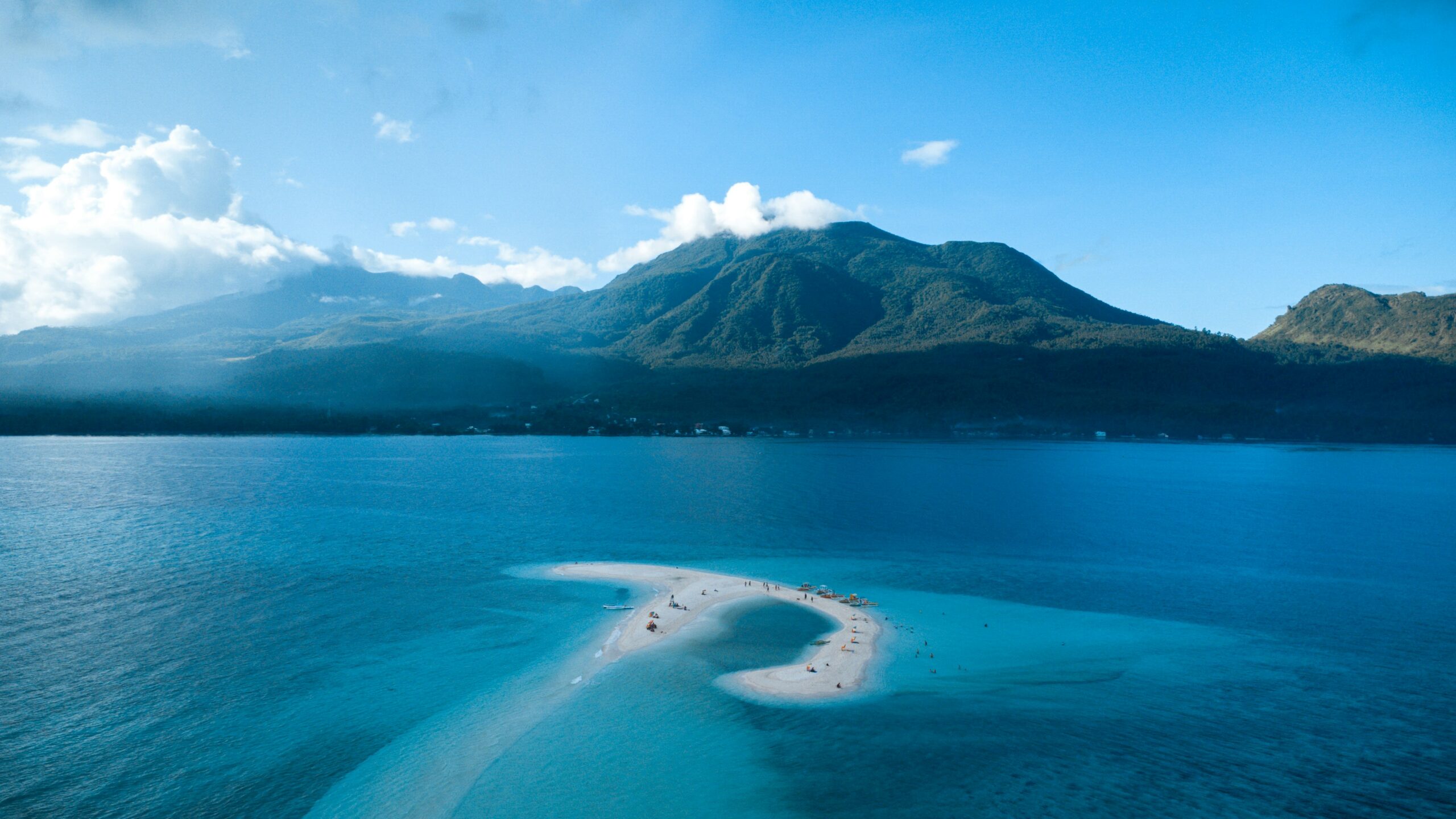
White Island is one of those places in Camiguin that looks almost too simple to be worth the trouble. It’s basically a strip of white sand in the middle of the sea. No coconut trees, no beach cottages, not even a decent spot to hide from the sun. And yet, it’s one of the places I’d put near the top of any Camiguin itinerary.
The reason is the view. From the sandbar, you get this incredible look at Camiguin’s volcanic mountains, especially Mount Hibok-Hibok. There’s nothing blocking the scenery. Just the sea between you and the island, with the white sand beneath your feet. The water is a beautiful shade of blue, and when the weather is clear, the mountains look ridiculously good from out there.
What I find interesting about White Island is that the experience is quite different from what people usually expect of a Philippine beach destination. You’re not going there for a full day of lounging around or ordering fresh coconuts under a tree. In fact, staying too long can be downright uncomfortable. The sand gets hot, there’s hardly anywhere to hide, and the sea can be unpredictable.
That’s why I’d treat White Island as an early-morning excursion rather than an all-day activity. Get your timing right, arrange the boat properly, and give yourself enough time to enjoy the place without rushing. Here’s everything I’d consider before heading out.
First, What Exactly Is White Island?
White Island, also called Medan Island, is an uninhabited sandbar roughly 1.4 kilometers off the coast of Mambajao, Camiguin. It’s surrounded by the Bohol Sea and has no permanent vegetation or buildings.
The sandbar isn’t always the same shape. Depending on the tide, you’ll see more or less exposed sand, and its curved outline changes over time. That’s something worth remembering if you’ve been looking at photographs online and have a particular shape in mind.
What really makes White Island stand out is its position directly opposite Camiguin’s volcanic landscape. Mount Hibok-Hibok provides the backdrop, and you get a perspective of the island that you simply can’t appreciate from the mainland.
I also like that there isn’t much to do here in the conventional sense. You walk around, take a swim, enjoy the view, and maybe spend a ridiculous amount of time trying to get a photograph with the mountains properly framed. That’s about it, and I don’t think it needs to be anything more.
White Island and Mantigue Island are different destinations. Mantigue has trees and a more developed coastal environment. White Island is an exposed sandbar, and the two have separate boat departure points.
Getting to the White Island Jump-Off Point
Your first destination is the White Island Ferry Terminal in Yumbing, close to Paras Beach Resort. This is where visitors register, arrange their boats, and pay the necessary fees.
If you’re staying around Yumbing or Agoho, getting there is straightforward. Depending on your accommodation, you can walk or take a short ride. From elsewhere in Mambajao, you’ll need a motorela, tricycle, hired vehicle, or rented motorcycle.
I’d arrange my transportation the previous evening, particularly for a sunrise trip. Finding a ride at five in the morning isn’t always as straightforward as finding one at noon. The last thing I want is to spend half an hour looking for a motorela when I should already be heading toward the boat terminal.
If you’re arriving in Camiguin from another province, you’ll first need to reach the island through Camiguin Airport or the ferry connection between Balingoan in Misamis Oriental and Benoni Port. From there, continue by road toward Mambajao.
Personally, I wouldn’t schedule White Island immediately after a flight or ferry arrival. I’d spend the night in Camiguin, get some rest, and make the sandbar my first activity the following morning.
When using Google Maps, search for “White Island Ferry Terminal” rather than simply “White Island.” The latter points offshore. Confirm your return transportation as well, especially if your accommodation is outside Yumbing.
What Time Should You Visit White Island?
I’d choose sunrise over almost any other time of day. White Island has absolutely no natural shade, so the temperature makes a huge difference to how much you’ll enjoy being there.
Early in the morning, the light is softer and the heat is much more manageable. It’s also a great time for photographs. The mountains are particularly striking when the morning light begins to reach them, and the water takes on different shades of blue as the sun climbs higher.
The Philippine Information Agency has reported visitors arriving as early as approximately 5:30 AM. That’s a useful reference, although the first actual boat departure depends on local operations and weather conditions.
I’d aim to reach the terminal around that time, then allow an hour or two on the sandbar. There’s no need to stay until lunchtime. By then, the sun is much stronger and walking around without shade becomes a lot less enjoyable.
One thing I wouldn’t overlook is the tide. Sunrise and low tide aren’t necessarily at the same time. If the sandbar is particularly important for your photographs, check the tide forecast before deciding exactly when to go.
Check the weather and tide predictions the evening before your visit. A low tide can expose more sand, but the boat operator’s safety advice should always take priority over photography plans.
How to Arrange Your Boat to White Island
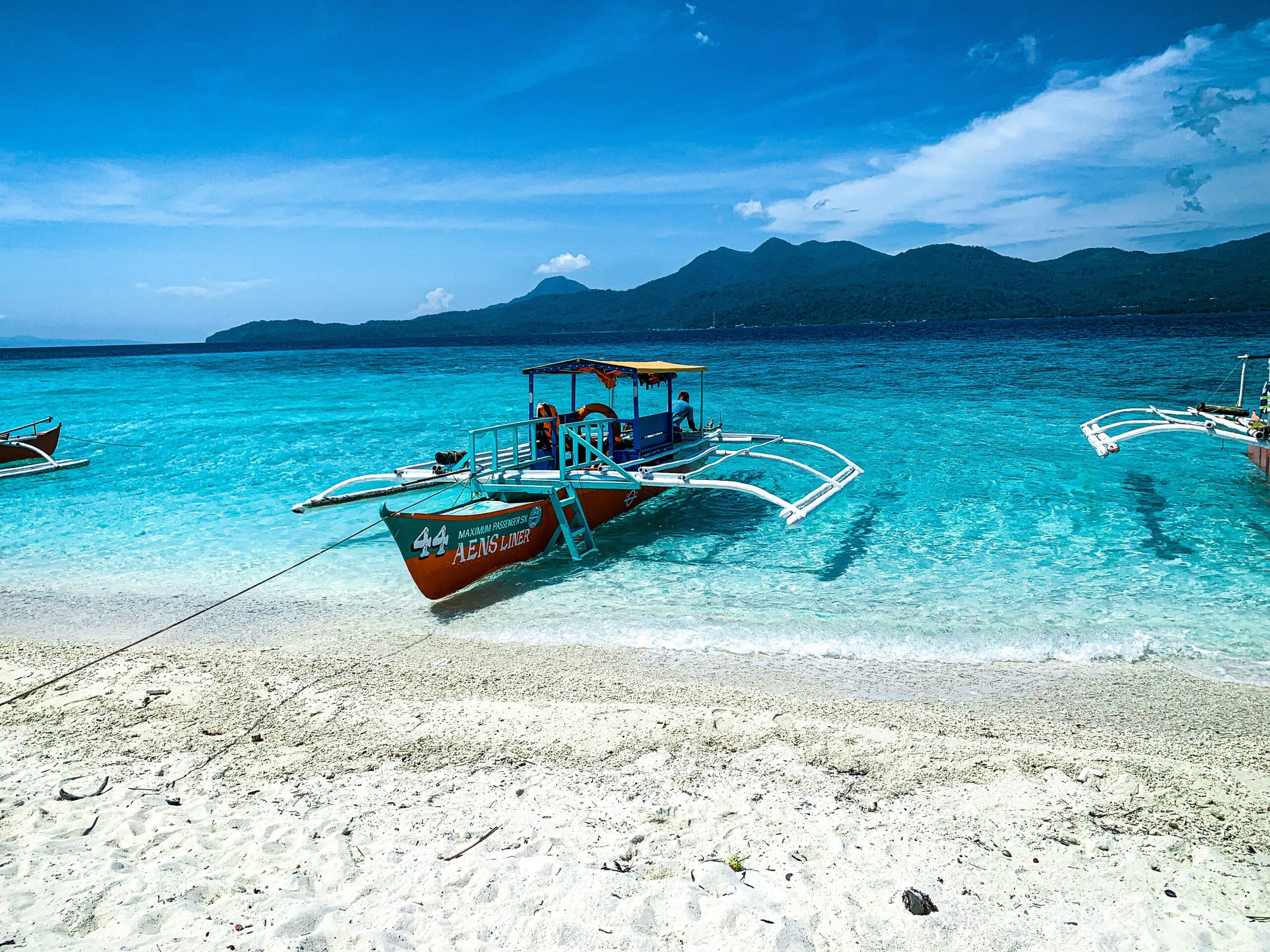
You don’t need an expensive guided tour to get to White Island. Visitors normally arrange a boat directly at the terminal, where local operators use traditional outrigger bancas for the crossing.
The ride generally takes around 5–15 minutes. It’s short enough that you can see the sandbar from the mainland, although the exact crossing time depends on the sea.
What matters most is understanding how the boat rental works. You’re generally paying for the boat rather than an individual seat. If you’re traveling with friends, splitting the cost is easy. If you’re alone, you can ask whether it’s possible to join another group.
I’d clarify the return arrangement before leaving. Ask how long you’re allowed to stay, whether the boat will wait or return later, and how you’ll identify your boat when it’s time to head back. Several bancas can look very similar, especially when you’re busy enjoying the beach.
There’s also the boarding itself. Traditional outriggers sit low in the water, and you’ll need to pay attention when stepping aboard. I wouldn’t carry an open camera bag or leave my phone loosely tucked into a pocket. A waterproof pouch saves a lot of unnecessary worry.
Wear the provided life jacket and listen to the operator’s instructions. The crossing is short, but it’s still an open-water boat trip.
White Island Entrance Fee and Boat Rental Cost
Recent 2026 travel references quote approximately ₱550 for a round-trip boat rental and ₱50–₱75 per person for the visitor or environmental fee. Published reports differ slightly, so I’d confirm the current rates directly at the terminal.
| Expense | Estimated cost |
|---|---|
| Round-trip boat rental | Around ₱550 per boat |
| Visitor or environmental fee | Around ₱50–₱75 per person |
| Umbrella or equipment rental | Ask about availability and current rates |
| Land transport to the terminal | Varies by starting location |
Using ₱550 for the boat and ₱75 per person as a planning example, four travelers would spend around ₱212.50 each. A solo traveler hiring an entire boat would spend approximately ₱625.
These figures exclude land transportation and optional rentals. Boat capacity must be confirmed with the operator, and rates can change.
I’d bring cash in smaller denominations. At an early-morning boat terminal, paying with exact or near-exact change is far easier than depending on someone to break a thousand-peso bill.
What I’d recommend: If you’re traveling as a couple or alone, ask whether sharing a boat is permitted. Just make sure everyone agrees on the return time before leaving. Saving a little money isn’t worth being stuck waiting for people who want to stay much longer than you do.
What to Do Once You’re on White Island
The first thing I’d do is walk a little farther along the exposed sand and look back toward Camiguin. That’s where the view really comes together. The island’s green volcanic slopes sit behind a wide stretch of blue sea, and there aren’t any trees or buildings interrupting the scene.
White Island is especially good for photography, although I wouldn’t spend my entire visit taking pictures. The shoreline itself is interesting, particularly where shallow water moves across the sand and leaves behind those little rippled patterns.
The sand is pleasant underfoot early in the morning, but small shells and bits of coral can make certain patches uncomfortable. I’d bring water shoes if I planned on walking around extensively.
Can you swim at White Island?
Yes, swimming is one of the main activities, provided the sea conditions are safe. The clear water is inviting, especially around the shallow portions, but don’t assume the entire area is suitable for swimming.
Water depth can change quickly, and currents aren’t always obvious from the surface. I’d stay within areas recommended by the boat operators rather than venturing farther simply because the water looks calm.
You can also bring snorkeling equipment, although I wouldn’t treat White Island as Camiguin’s main snorkeling destination. If underwater scenery is your priority, Mantigue Island deserves a separate visit.
How long should you stay?
I think one to two hours is enough for most visitors. You can walk along the sandbar, take photographs, swim for a while, and still return before the heat gets uncomfortable.
I’d happily spend a few minutes simply sitting near the water and watching the mountains. It’s one of those rare places where doing very little is actually the point of visiting.
What I’d Bring to White Island
This is where I’d be slightly more prepared than usual. White Island has no permanent restaurants, toilets, changing rooms, or natural shade. Forgetting something important means doing without it until you return to the mainland.
My packing list would be fairly short:
- Drinking water: Bring enough for your entire visit. Even early in the morning, the combination of sunshine and saltwater can leave you thirsty.
- Sunscreen and sun protection: A hat, sunglasses, and lightweight cover-up are useful. I’d wear a rash guard if I planned to swim for long.
- Waterproof bag: Protect your phone, camera, wallet, and dry clothes during the boat crossing.
- Sandals or water shoes: Choose footwear that’s comfortable around wet sand and uneven patches.
- Small towel: You’ll appreciate having something dry after swimming.
- Personal medication and essentials: Bring anything you may need because there are no shops offshore.
I’d also use the restroom before leaving the mainland and eat something light if I were hungry. There’s no reason to arrive at White Island already thinking about breakfast.
And whatever you bring, take it back with you. Even small pieces of plastic or food packaging are a problem on an exposed sandbar.
Umbrella rentals have been reported by travelers, but don’t rely on their availability. Bring your own personal sun protection and avoid leaving belongings unattended while swimming.
Best Season to Visit White Island and Why Tides Matter
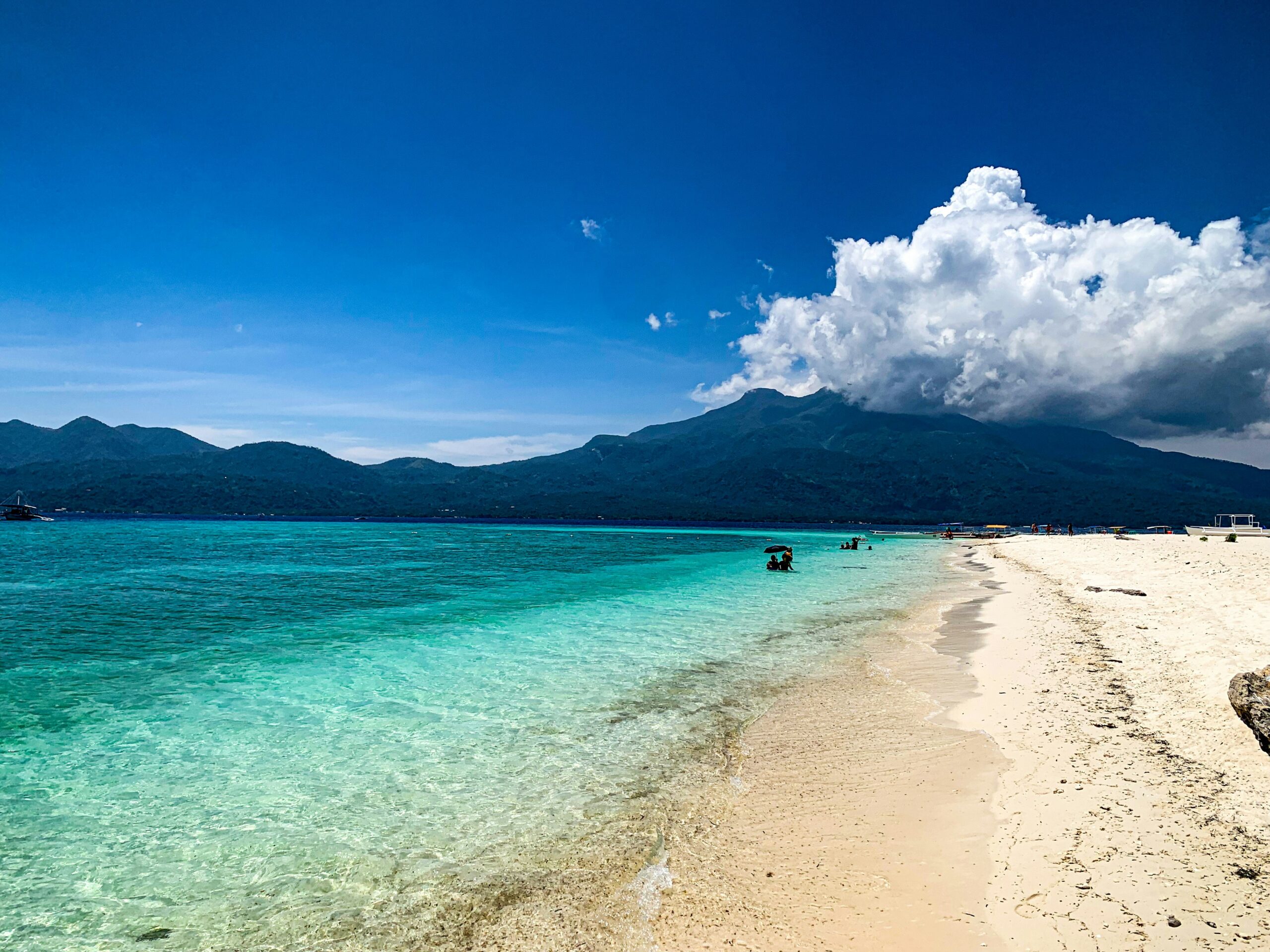
Camiguin can be visited throughout the year, but White Island is much more dependent on the weather than attractions on the mainland. Even when the sky looks clear, strong winds or rough water can affect the boat crossing.
The generally drier months around March to June are popular for island trips, particularly when travelers want clearer skies and more favorable sea conditions. However, calm seas are never guaranteed, even during the warmer months.
I wouldn’t make the mistake of treating the weather forecast as a formality. If a boat operator says conditions aren’t safe, I’d change my plans. Camiguin has plenty of other places to visit, and White Island isn’t going anywhere.
What happens during high and low tide?
White Island changes shape depending on the water level. During lower tides, more sand is exposed, which gives visitors more room to walk and take photographs. At higher tides, the visible sandbar becomes smaller.
This is why photographs taken on different days can look surprisingly different. The sandbar isn’t disappearing permanently. Much of the difference comes from the changing water level and shifting sand.
Check local tide predictions before your visit. I’d also ask the boat operators what conditions have been like recently, since they make these crossings regularly.
For weather warnings, use PAGASA’s official marine advisories rather than relying only on a general weather app.
A Simple Half-Day White Island Itinerary
I’d give White Island the first part of the day and keep the schedule fairly relaxed. There’s no need to cram several attractions into the same morning, especially if the weather or boat arrangements cause delays.
| Approximate time | Activity | What to remember |
|---|---|---|
| 5:00–5:30 AM | Leave your accommodation for Yumbing | Arrange transportation the night before |
| 5:30–6:00 AM | Register and arrange the boat | Confirm fees and return arrangements |
| 6:00–7:30 AM | Explore, swim, and take photographs | Stay within safe swimming areas |
| 7:30–8:00 AM | Return to the mainland | Follow your agreed pickup time |
| After 8:00 AM | Breakfast and continue sightseeing | Leave room for weather-related changes |
These are suggested times, not an official departure schedule. Local operating hours, tide levels, and weather can change the actual plan.
After returning to the mainland, I’d look for a proper breakfast around Mambajao. A plate of garlic rice, eggs, and something hot to drink sounds especially good after an early boat ride. Then I’d head toward the next attraction rather than going straight back to bed.
Where to Go After White Island
One of the best things about Camiguin is how close many of its major attractions are to one another. You can spend the morning on a sandbar and still have enough time to visit a waterfall, spring, or historical site later in the day.
Katibawasan Falls
Katibawasan Falls would be my first choice after White Island if I wanted a change of scenery. Located inland from Mambajao, it features a tall waterfall surrounded by dense vegetation.
After being exposed to the sun on White Island, the greener, more sheltered surroundings are a welcome change. It’s also a good opportunity to see another side of Camiguin’s volcanic terrain.
Ardent Hot Spring
Ardent Hot Spring is another popular stop around Mambajao. I’d visit later in the day when relaxing in the pools sounds more appealing. Check the current pool conditions and temperatures rather than assuming every pool is hot.
Sunken Cemetery and Old Church Ruins
If history interests you, head toward Catarman to see the Sunken Cemetery and Old Church Ruins. Both are connected to Camiguin’s volcanic past and make a good combination on a western coastal drive.
The Sunken Cemetery is especially interesting because of its offshore cross and the story behind the landscape. It offers a completely different perspective on the same volcanic forces that created Camiguin’s mountains.
Mantigue Island
Mantigue Island deserves more time if you’re interested in another island excursion. Unlike White Island, it has trees and a different coastal environment, with snorkeling among its attractions.
I wouldn’t rush through White Island and Mantigue just to say I’ve visited both. I’d give Mantigue a separate morning or afternoon and enjoy each destination properly.
My preferred route: White Island at sunrise, breakfast in Mambajao, then Katibawasan Falls. Save Ardent Hot Spring for later in the day, or choose the Sunken Cemetery and Old Church Ruins if you want to focus on Camiguin’s history.
Common Mistakes to Avoid at White Island
The first is arriving too late. White Island is beautiful, but there’s nothing enjoyable about standing on hot sand under direct midday sunlight with nowhere to sit in the shade.
The second is ignoring the weather and tide conditions. A clear-looking sky doesn’t guarantee a safe crossing, and the amount of exposed sand can be very different from what you expected.
I’d also be careful about swimming too far from the shoreline. The water can look shallow and calm, but currents and underwater conditions aren’t always obvious. Stay within areas recommended by the local operators and supervise children closely.
For travelers with limited mobility, it’s worth contacting an operator before visiting. Traditional bancas may require stepping across moving surfaces, and the sandbar has soft, uneven terrain rather than accessible pathways.
Finally, I’d avoid building an entire day’s schedule around a specific boat departure. Weather delays happen, and sometimes the safest decision is to cancel the crossing altogether. Keep an alternative mainland attraction in mind.
Frequently Asked Questions About White Island in Camiguin
How much is the entrance fee to White Island in Camiguin?
Recent 2026 references report approximately ₱50–₱75 per person, excluding boat rental. Confirm the current official rate at the White Island Ferry Terminal.
How much does the boat to White Island cost?
A commonly reported round-trip rental is approximately ₱550 per boat. Passenger capacity and any additional charges should be confirmed with the operator.
Can you visit White Island without a tour?
Yes. Independent travelers can arrange a boat directly at the Yumbing terminal. You can also ask your accommodation to help coordinate the trip.
How long is the boat ride to White Island?
The crossing generally takes approximately 5–15 minutes, depending on the vessel and sea conditions.
Can you stay overnight on White Island?
No. White Island is a day-visit sandbar without permanent accommodations or visitor facilities. Stay in Mambajao or nearby areas instead.
Is White Island safe for children?
Families can visit, provided sea conditions are suitable. Children require close supervision, adequate sun protection, drinking water, and appropriate flotation equipment.
Is sunrise or sunset better at White Island?
I’d choose sunrise for softer light and more comfortable temperatures. Sunset visits depend on local operating hours and safe return arrangements. Don’t assume boats operate after dark.
Are there restaurants or toilets on White Island?
There are no permanent restaurants, toilets, or changing facilities on the sandbar. Prepare on the mainland and bring everything you need.
Can I use a drone at White Island?
Check current local tourism restrictions and Philippine aviation requirements before flying. Obtain any necessary permission and avoid flying near visitors, boats, or aircraft.
Is White Island Worth Visiting?
Absolutely, especially if you’re already spending a few days in Camiguin. It’s an easy trip to arrange, the boat crossing is short, and the view of the island’s volcanic mountains from the sandbar is unlike anything you’ll see from the mainland.
I’d just keep my expectations realistic. There are no elaborate facilities, no beach bars, and not much to do beyond enjoying the sand, water, and scenery. But that’s also what makes the place appealing.
Go early, bring what you need, and give yourself enough time to enjoy it. Then head back to Mambajao for breakfast and continue exploring the rest of Camiguin.
Sources and Further Reading
The following references support the destination information, reported visitor fees, boat arrangements, and practical safety advice. Prices and local operating conditions may change, so confirm them before traveling.
- Provincial Government of Camiguin: Tourist Attractions
- Department of Tourism: Camiguin Destination Guide
- Belka Travel: White Island Boat Rates and Visitor Information, October 2026
- Txaleta de Camiguin: White Island Travel Guide, 2026
- Robert Tramp: White Island Entrance Fees and Nearby Attractions, 2026
- PAGASA: Official Marine Gale Warnings
For more Philippine destinations and practical travel guides, visit Every Province PH.